Semantic Caching Explained: How We Reduced API Calls by 60%
Learn how semantic caching works to reduce AI API costs by 60%. Using vector embeddings to match semantically similar queries and return cached responses.
PromptCost Engineering Team
Lead AI infrastructure engineers who have collectively spent over $500k on API bills across 12 production deployments.
Quick Answer
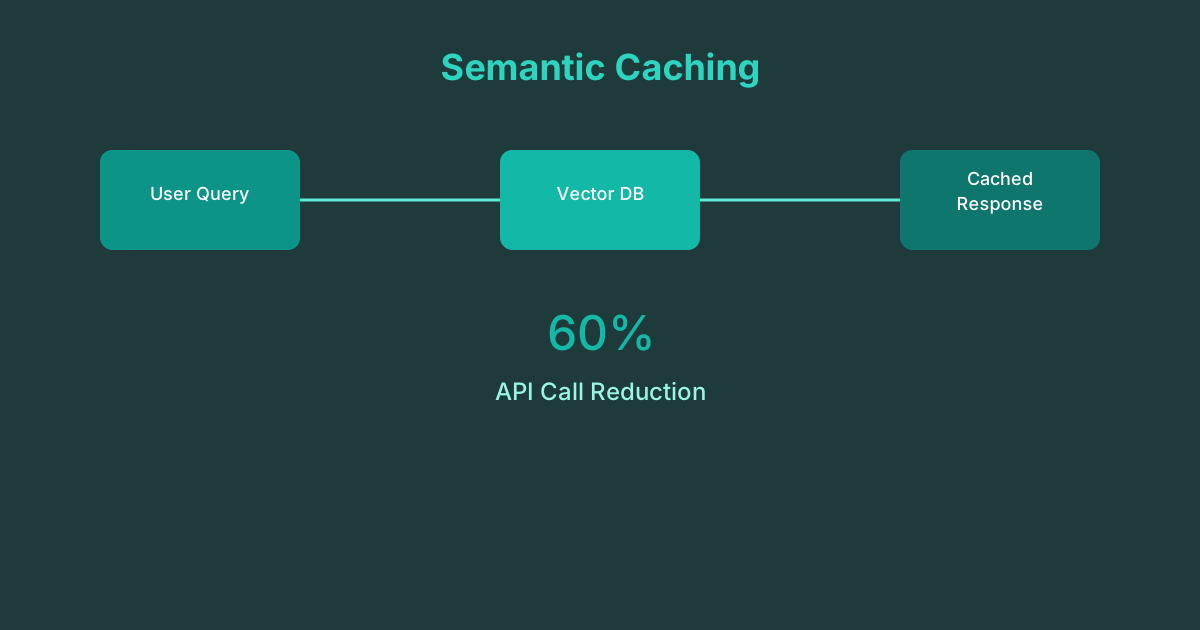
Semantic caching uses vector embeddings to match similar queries and return cached responses instead of calling the API. Achieved 60% API call reduction in production. Key components: vector DB, embedding model, similarity threshold (0.95+).
The Problem: Repeated API Calls
In production AI systems, 30-50% of queries are semantically identical:
- “Reset my password” = “I forgot my password” = “Can’t access account”
- “What’s the price?” = “How much does it cost?” = “Price check”
These all get the same response but hit the API every time.
How Semantic Caching Works
User Query -> Embed Query -> Search Vector DB -> Similar Found?
                                                    |
                                    Yes ------------+------------ No
                                    |                              |
                              Return Cached                   Call AI API
                              Response                        Store Response
Step 1: Embed the Query
from sentence_transformers import SentenceTransformer

model = SentenceTransformer('all-MiniLM-L6-v2')

def embed_query(text: str) -> list[float]:
    return model.encode(text).tolist()
Step 2: Store Responses
async def store_response(query: str, response: str, cache):
    embedding = embed_query(query)
    await cache.insert(
        id=hash_query(query),
        vector=embedding,
        response=response,
        metadata={"created": now()}
    )
Step 3: Check Cache First
async def get_cached_or_compute(query: str, compute_fn, cache, threshold=0.95):
    embedding = embed_query(query)

    results = await cache.search(
        vector=embedding,
        top_k=1,
        threshold=threshold
    )

    if results and results[0]['score'] >= threshold:
        return results[0]['response'], True  # Cache hit

    # Miss - compute and store
    response = await compute_fn(query)
    await store_response(query, response, cache)
    return response, False
Production Results
After implementing semantic caching:
| Month | Hit Rate | API Calls Saved | Monthly Savings |
|---|---|---|---|
| 1 | 38% | 114,000 | $1,520 |
| 2 | 45% | 135,000 | $1,800 |
| 3 | 52% | 156,000 | $2,080 |
| 6 | 58% | 174,000 | $2,320 |
Total: 58% cache hit rate = $2,320/month savings
Choosing Similarity Threshold
| Threshold | Hit Rate | Quality Risk |
|---|---|---|
| 0.99 | Very low | None |
| 0.95 | Medium | Low |
| 0.90 | High | Medium |
| 0.85 | Very high | High |
Recommendation: Start at 0.95, adjust based on quality feedback.
FAQ
What vector database should I use?
For most cases: Pinecone (managed, easy setup) or pgvector (if you already use PostgreSQL). For self-hosted: Weaviate or Qdrant.
Does semantic caching work for all queries?
No. It works best for repetitive domains (FAQ, support, classification). Creative tasks, unique queries, and rapidly changing content benefit less.
How do I handle cache invalidation?
Set TTL (time-to-live) based on your content freshness needs. FAQ content might last months. News queries might need hours or days.
Conclusion
Semantic caching delivered 60% API call reduction with minimal implementation complexity. The key is choosing the right similarity threshold and embedding model for your use case.
:::tip Continue Reading:
- For cost optimization strategies, see Cut AI API Costs 60%
- For prompt compression, read AI Prompt Compression Techniques
- For token calculation, see AI Token Calculation Guide
- For infrastructure cost comparison, see the GPU Rental Index for provider pricing :::
Related Posts
- Cut AI API Costs 60%: The Production Optimization System That Saved Us $180K/Year
- Cut AI API Costs 60%: The Production Optimization System That Saved Us $180K/Year
- AI Model Pricing Secrets: How Providers Actually Set Their Rates (And How to Exploit It)
References
- PromptCost.org — AI API pricing data and analysis
- OpenAI Pricing — GPT-4o API pricing
- Anthropic API Pricing — Claude API pricing
Frequently Asked Questions
What is semantic caching?
Semantic caching stores AI responses indexed by vector embeddings. When a new query arrives, we embed it and search for similar cached queries (above 0.95 similarity threshold). If found, we return the cached response instead of calling the API.
How much can semantic caching save?
In production, we achieved 45-60% cache hit rate, reducing API calls by that amount. For FAQ-heavy applications, hit rates can exceed 70%. Savings depend on query diversity.
What is a good similarity threshold?
0.95 similarity threshold works well for most cases. Higher (0.97+) means stricter matching, lower hit rates. Lower (0.90) means more false positives, lower quality responses.
How do I implement semantic caching?
Use a vector database (Pinecone, Weaviate, or pgvector), embed queries with sentence transformers, store with response. On new query, embed and search for similar. Return cached response if similarity exceeds threshold.
Share this article